
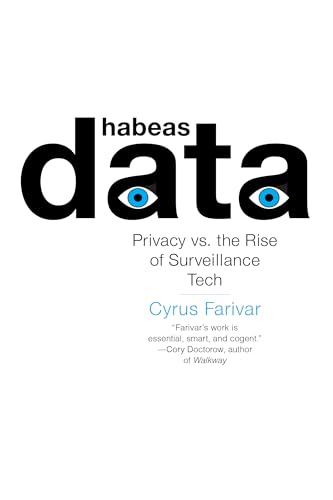
Habeas data : privacy vs. the rise of surveillance tech / Cyrus Farivar.
Material type: TextLanguage: English Publisher: Brooklyn, NY : Melville House Publishing, 2019Edition: [First Melville House paperback edition]Description: xviii, 284 pages ; 21 cmISBN:
 - 1612197752
- 9781612197753
- KF1262 .F37 2019
| Item type | Current library | Call number | Copy number | Status | Notes | Date due | Barcode | |
|---|---|---|---|---|---|---|---|---|
| Book | TBS Barcelona | 1 | Available | SOON AVAILABLE |
Browsing TBS Barcelona shelves Close shelf browser (Hides shelf browser)


Telephones : how a fateful call in 1965 from a Los Angeles pay phone still rings out today — How the government cracked an iPhone-without Apple's help — How one mugger's calls helped create the NSA's post-9/11 phone metadata surveillance program — When Big Brother rides in the back seat — Can the police use extrasensory technology to look into your house without a warrant? — Why (amazingly) e-mail providers won't give up messages without a warrant, even though the Supreme Court has never ruled on the issue — Why the eighteenth-century Constitution protects against twenty-first-century satellite-based tracking — How your phone can lead the authorities right to your door — Can police search your phone when you're arrested? — Why privacy needs all of us — Who watches the watchers?
"Until the 21st century, most of our activities were private by default, public only through effort; today anything that touches digital space has the potential (and likelihood) to remain somewhere online forever. That means all of the technologies that have made our lives easier, faster, better, and/or more efficient have also simultaneously made it easier to keep an eye on our activities. Or, as we recently learned from reports about Cambridge Analytica, our data might be turned into a propaganda machine against us. In 10 crucial legal cases, [this book] explores the tools of surveillance that exist today, how they work, and what the implications are for the future of privacy"-- Provided by publisher.
