
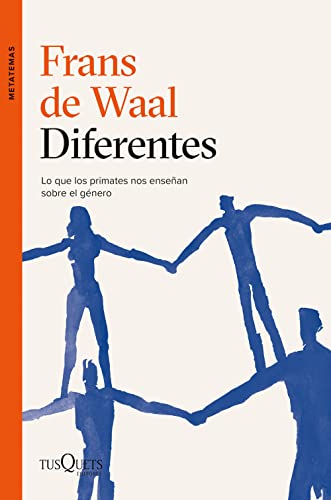
Diferentes : lo que los primates nos enseñan sobre el género / Frans de Waal with drawings and photographs by the author ; translated by Ambrosio Garcóa Leal.
Material type: TextLanguage: Spanish Original language: English Publication details: Barcelona : Tusquets Editores, 2022.Description: 440 pages : 12 unnumbered pages of plates : illustrations (black and white) ; 25 cmISBN:
 - 9788411071574
- QP81.5 .W33 2022
| Item type | Current library | Call number | Copy number | Status | Date due | Barcode | |
|---|---|---|---|---|---|---|---|
| Book | TBS Barcelona | QP81.5 WAA (Browse shelf(Opens below)) | 1 | Available | B05770 |
Lo que el reino animal nos enseña sobre el sexo, el género y las relaciones humanas
El gran estudioso de los primates Frans de Waal aborda enDiferentes la actual y debatida prevalencia del género (la división cultural entre lo masculino y lo femenino) sobre el sexo (la división biológica entre machos y hembras). Explora también los condicionantes tanto genéticos como culturales que subyacen a la conducta humana y a las diferencias respecto a la agresividad, la cooperación o la competencia entre machos y hembras de chimpancés y bonobos, y su reflejo en las relaciones de hombres y mujeres. Rebatiendo las teorías que postulan que toda conducta viene dictada por la herencia genética, el autor subraya lo que monos y primates pueden enseñarnos acerca de la identidad y la actividad sexual. Es hora de abandonar mitos como el de la mayor impulsividad sexual masculina frente a la femenina o los referidos a la homosexualidad (presente en más de cuatrocientas especies animales) o el mundo trans (una condición que también existe en el reino animal). De Waal ilustra sus a menudo polémicos argumentos con deliciosas historias anécdotas sobre los animales que ha estudiado a lo largo de su dilatada carrera.
What the Animal Kingdom Teaches Us About Sex, Gender, and Human Relationships
Renowned primatologist Frans de Waal explores in Different the current and hotly debated prominence of gender (the cultural distinction between masculine and feminine) over sex (the biological distinction between male and female). He also examines the genetic and cultural factors that underlie human behavior and the differences in aggression, cooperation, and competition between male and female chimpanzees and bonobos—and how these are reflected in the relationships between men and women.
Challenging theories that claim all behavior is dictated by genetic inheritance, de Waal emphasizes what monkeys and other primates can teach us about identity and sexual behavior. It’s time to move past myths such as men being inherently more sexually impulsive than women, or misconceptions about homosexuality (which exists in over four hundred animal species) and the trans experience (a condition also found in the animal kingdom).
De Waal supports his often provocative arguments with charming stories and anecdotes drawn from the animals he has studied throughout his long and distinguished career.
